 713-722-7800
Fire Sprinkler Repair: 5 Tips for Business Owners
Fire Sprinkler Repair Essential Tips for Business Owners
If you manage a commercial building(s), you are familiar with mandated maintenance and testing for fire sprinklers; monthly, quarterly, semi-annual, and annual testing of fire suppression systems is assigned to someone who is accustomed to the tasks. Maintenance is the key to keeping these vital equipment systems functioning properly for many years.
Even with proper maintenance, fire sprinkler systems will occasionally need repair and replacement. What are the indicators for repairs? Some are obvious and some take a little bit of discernment. Since fire sprinkler systems are in place “just in case,” it is easy to ignore the problem.
Because life and property are at stake, making these repairs are essential for the present and future of your business. Here are the top five problems with Fire Sprinkler Repair.
- Fire Sprinkler Repair: External Corrosion. A common theme for corrosion is exposing the metal to moisture and air. Coatings, such as galvanization add a degree of corrosion resistance, but all metals used in fire sprinklers are susceptible. Rust and other hydrates form when metals react with oxygen-rich air. This can lead to failures to activate or, if left unattended, to leaks.
- Fire Sprinkler Repair: Internal Corrosion. Corrosion also happens on the inside of metal pipes. However, the corrosion on the inside is more dangerous because there are fewer visible indicators. Normally, the water supply is well-oxygenated; while flushing is necessary, it also adds oxygen to the system. Older O-rings have been known to develop excessive corrosion at sprinkler heads. Internal corrosion can lead to blockage at the sprinkler heads and other openings.
- Fire Sprinkler Repair: Plugged Service Lines. Rust and corrosion is not the only internal problem. It is important to know the chemical makeup of your local water supply. While water purification removes almost all of the impurities in water, the small amount that remains is heavier or denser than the water that moves it.Calcium carbonate (lime) deposits settle on the bottom of the supply line and restrict water flow. Again, deposits are not normally visible and are usually detected during maintenance testing. The National Fire Protection Agency lists 15 indicators that should initiate further inspection, including foreign material in water samples and insufficient flow.1
- Fire Sprinkler Repair: When an inspection reveals a leak of any size, it should be repaired immediately. A little water can create significant damage very quickly, and a leak is never likely to go away on its own. One small leak may be the first of many, so repairs may lead to preventative maintenance that avoids further leaking.
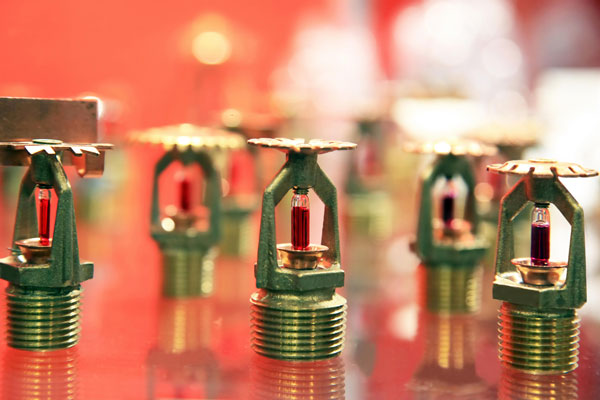
- Fire Sprinkler Repair: Damaged Sprinkler Heads. The mechanism in each sprinkler head is very delicate, including glass components. Very slight contact with moving objects can compromise the sprinkler head and produce a cascade of water.While you are grateful for the spray of water should a fire ignite, it will cause water damage and bring productivity to a screeching halt. Turn off the water supply, call your fire safety consultant, and begin the cleanup.
Have a question about Fire Sprinkler Repair?
Call Fire Safe Protection Services today at 713-722-7800 or visit our online form and we will be in contact as soon as possible about your questions regarding Fire Sprinkler Repair.
1 https://nfsa.org/2020/11/03/pipe-obstructions-investigation-prevention-and-solutions/