 713-722-7800
5 Rules of Fire Safety Standards
Fire Safety Standards You Need to Know
Exploring statistics concerning fire safety is actually very encouraging, since:
- The number of fires has dramatically decreased over the last forty years1
- Generally, the number of fire deaths is down over the same period especially when you factor in the growth in population.2
- While monetary loss due to fire is up slightly up, the cost of building materials is way up significantly.3
A conclusion can be made that fire safety materials, procedures, and education are helping people avoid fires and the loss that fire brings. With that in mind, here are some fire safety tips for high-rise buildings.
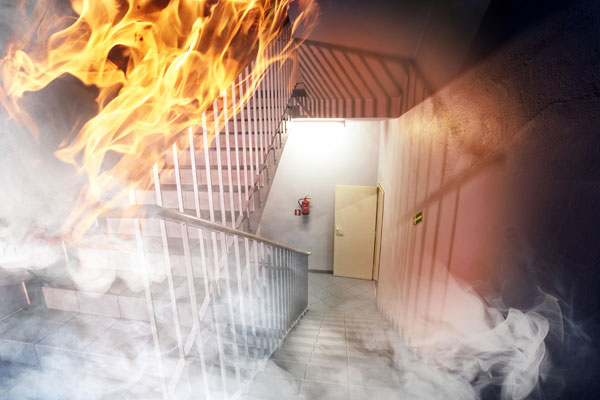
When a building reaches higher than 10 stories, it surpasses the reach of fire department ladder trucks and the ability to deliver water to the flame. Therefore, living and working in tall buildings require additional safety precautions. Fire safety equipment extends beyond a simple fire extinguisher and a smoke alarm. If you live or work in a high-rise building, it is in your best interest to identify and locate fire safety equipment and appropriate exit routes in the case of a fire event.
Fire Safety Standards Rule #1 Be Prepared.
Notice the locations of fire equipment at your disposal, including fire sprinkler heads and fire extinguishers. Your building will have an evacuation plan, with a designated escape route for your floor; locate all potential exit routes in case the designated route is blocked. Elevators are not a viable option for an escape route for several reasons; the loss of electricity quickly makes elevators unusable.
Fire Safety Standards Rule #2 Prepare a small survival kit that includes items helpful during a fire event.
Include a whistle, to alert emergency responders to your location, flashlights with batteries, and towels. Make the towels thoroughly wet in case of a fire; they can be very helpful during your escape.
Fire Safety Standards Rule #3 Understand the Path of Fire and Smoke.
To escape, it is important to know that fire seeks two things—fuel and oxygen. While it might not be possible to starve it of fuel, it is important to avoid providing oxygen. Close every door as you make your exit. Elevators and stairways will act as chimneys, bringing outdoor air to the fire, if exposed to the outside.
Hot air and smoke will always move up, drawing the flame with it. Therefore, move down as soon as possible. When a room is full of smoke, it will move upward, so get low and make your escape downward. As you exit the building, make sure to shut the door behind you to separate oxygen from the fire.
Fire Safety Standards Rule #4 Keep Your Head.
Anticipate chaos will ensue during a fire event and avoid responding to chaos with panic. If you discover a fire and do not hear a fire alarm, pull the alarm and escape. Do not pause to call 911—the alarm already did that. Do not make calls to family or friends. Move forward; if one route is unusable, find another. Move downward, for that is where you will find safety.
Fire Safety Standards Rule #5 Don’t Reenter.
There is no possession that you left behind worth your life, so wait until the fire is extinguished and the “all clear” sign is given. You might be tempted to reenter the building to assist with rescuing occupants. However, remember the chaos that you just escaped from? Occupants are trying to make their way out and emergency responders are working to guide them to safety. If you reenter, you distract emergency personnel as they try to rescue you.
Have a question about Fire Safety Standards?
Call Fire Safe Protection Services today at 713-722-7800 or visit our online form and we will be in contact as soon as possible about your questions regarding Fire Safety Standards.
1 https://www.nfpa.org/-/media/Files/News-and-Research/Fire-statistics-and-reports/Building-and-life-safety/oshighrise.pdf
2https://injuryfacts.nsc.org/home-and-community/safety-topics/fire-related-fatalities-and-injuries/#:~:text=Although%20the%20number%20of%20fire,the%203%2C500%20total%20in%20202
3https://www.statista.com/statistics/203776/property-loss-in-the-us-due-to-fires/#:~:text=U.S.%20fire%20statistics%20%2D%20property%20loss%20due%20to%20direct%20damage%201990%2D2021,-Published%20by%20Erin&text=In%202021%2C%20fires%20in%20the,U.S.%20dollars%20in%20property%20loss