
 713-722-7800
Fire Sprinkler Heads: Quick vs Standard Response
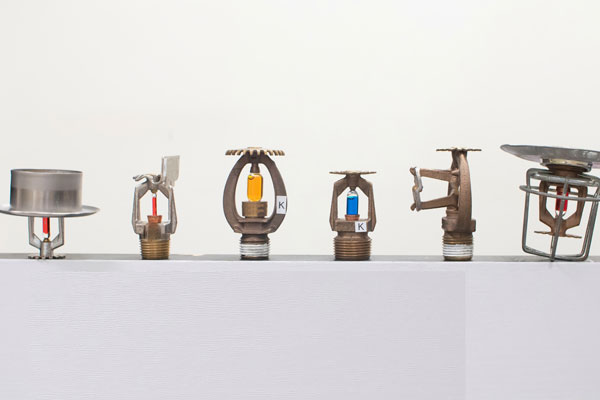
Quick vs Standard Response Fire Sprinkler Heads
When you enter the sporting goods department, you may look at a wall display of fishing lures differently than an experienced angler. An angler will recognize lures designed to attract certain fish during certain water conditions. The same thing happens at a hardware store with a wall of fasteners; you look at that wall differently than a skilled construction worker. Fire sprinkler heads also come in a variety of specifications to produce specific results that are not readily discernable for most people. Let’s look at sprinkler heads.
The first fire sprinklers were installed in 1874 and were very simple. Scientists learn from every fire and the technology improves with every iteration. Since the 1960s, sprinkler heads have used a glass bulb filled with liquid as a trigger; heat causes the liquid to expand, breaking the bulb, and releasing water onto the fire. More recent refinements include:
- Perfect spray patterns and angle of spray to completely cover a given space.
- Perfecting the temperature is necessary to break the bulb. This prevents the sprinkler from activating when the AC is off.
- Perfecting droplet size to accomplish specific tasks.
An important technological development differentiates between Standard fire sprinkler heads and Quick or Fast sprinkler heads. It is the same technology used for fires in different settings.
A fire needs three elements to start and spread: fuel, oxygen, and a flame/spark source. Fire safety equipment is designed to eliminate one or more of these elements from an existing fire to extinguish the blaze. After a fire begins and all three elements are present, fire sprinklers use water to element fuel. Water also has a smothering effect on the flame source, but the design is to douse fuel sources to prevent the spread of fire.
Standard Fire Sprinkler Heads
A typical application for standard sprinkler heads would be in a warehouse or factory setting. Standard sprinkler heads have a higher activation temperature, giving workers time to extinguish a small fire with other measures. Sprinklers are rated, using laboratory conditions to determine a response time index (RTI). These sprinkler heads disperse water downward, wetting potential fuel before it can ignite. The goal is to prevent the spread of a fire and give local emergency responders time to engage the flame.
Quick Response Fire Sprinkler Heads
A typical application for quick response heads would be an office building, hotel, or hospital. The focus is on people first, compared to stored materials. Therefore, the RTI is much lower, activating quicker in the presence of a fire. The spray pattern is directed upward, toward the ceiling and upper walls. The danger in heavily occupied structures is the fire spreading rapidly. “Flash fire” is a very dangerous condition that endangers people more than materials. By wetting the ceiling and walls, these fire sprinkler heads lengthen the time it takes for a flash fire to occur. The goal is to prevent the fire from spreading quickly, giving occupants more time to evacuate.
Fast Response Fire Sprinkler Heads
Fast Response sprinkler heads have the same RTI as Quick Response heads. They spray up and out for the same purpose, but they are designed for residential settings. The spray pattern will be slightly different to accommodate smaller spaces.
Have a question about Fire Sprinkler Heads?
Call Fire Safe Protection Services today at 713-722-7800 or visit our online form and we will be in contact as soon as possible about your questions regarding Fire Sprinkler Heads.