 713-722-7800
Best Practices for Fire Extinguishers
Best Practices for Fire Extinguishers
The Do’s and Don’ts of Fire Extinguishers
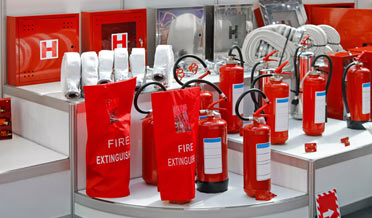
Commercial structures often have integrated fire safety systems that employ fire sprinklers, suppression systems, Fire Extinguishers, smoke detectors, and EMS communication systems. The combination of these systems with building codes and evacuation plans saves lives every year, and the success of integrated fire safety programs is rightfully celebrated. With such notoriety for big components, it is easy to overlook the lowly fire extinguishers.
Using a fire extinguisher at the base of a small fire is reminiscent of camping instructions, about dousing the campfire with water until the coals are cold to prevent a wildfire. It is much easier to smother a flame when it is small than to use large, widespread systems to extinguish a large fire. Fire extinguishers are provided in key locations to handle the small flame before it has a chance to grow.
As a reminder, a fire needs three elements to start and continue—an ignition source (it could be heat, an electric spark, or a chemical reaction), fuel (anything that will burn), and oxygen. Extinguishing a fire requires separating one or more of these elements from the others. Remove the oxygen and the fire goes out. Separate the fuel from the ignition and the fire goes out.
Fire extinguishers are small, handheld devices that allow the user to get very close to a small blaze. Their purpose is to separate the fuel from oxygen and the flame. Once activated, the retardant inside the extinguisher is released with force at the base of the flame, so the user must get close to the fire; a broad spray in the general direction of the flame is ineffective. Their small size limits the amount of retardant, so they must be used properly to be useful.
While oxygen is common to all fires, the ignition source and type of available fuel are incredibly diverse. For this reason, fire extinguishers are made for a variety of fire types.
- Class A extinguishers are used for common fuel sources. They use a quick burst of gas to push away the oxygen and cover the fuel in a non-combustible powder to separate the fuel.
- Class B extinguishers are used for combustible liquid fires. The quick burst of gas pushes away the oxygen momentarily and foam covers the small amount of liquid. The foam creates a seal to prevent the reignition of the liquid.
- Class C extinguishers are used for small electrical fires. Carbon dioxide gas pushes the oxygen away and cools the immediate vicinity and a non-conductive dry chemical coats the fuel source.
- Class D extinguishers are used on combustible or flammable metals. These types of fires are rare, but the flame is intensely hot. The quickly moving gas pushes the oxygen away and the dry chemical coats the fuel, separating it from the flame. The chemical used in Class D extinguishers absorbs heat to help prevent re-ignition.
- Class K extinguishers are used for fat and oil fires, typically in food preparation areas. A gas rushes out of these extinguishers to push the oxygen away, then a soapy foam that covers the surface of the fat, smothering the steam and vapor, and covering the fuel.
Larger versions of these extinguishers are called fire suppression systems and are employed in specialized areas as needed.
Since fire extinguishers are specialized, small, and mobile, placement is extremely important to their effectiveness. Building codes often include requirements for placing the requisite classed extinguisher near potential ignition sources.
The content of fire extinguishers includes a propellant and a retardant chemical. Over time, the propellants lose power and become ineffective. Some extinguishers are rechargeable, others are not. All extinguishers need to be inspected annually and recharged or replaced as needed.
Have a question about your fire extinguishers?
Call Fire Safe Protection Services today at 713-722-7800 or visit our online form and we will be in contact as soon as possible about your fire extinguishers questions.