 713-722-7800
NFPA Standards
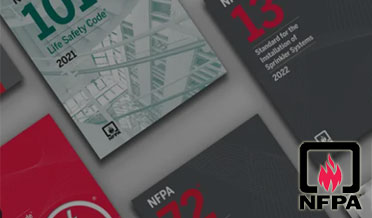
6 Essential NFPA Standards Every Safety Professional Should Know
The Industrial Revolution (1760 to 1840) brought exponential growth to the United States. Cities blossomed as manufacturing and commerce exceeded our wildest expectations. Buildings were constructed very close together and when something went wrong, it usually went very wrong.
A small fire in a Chicago stable started a blaze that lasted for 36 hours, destroying 3.3 square miles, killing 300 people, and leaving 100,000 Chicagoans homeless. This was not an isolated tragedy. Many fires and explosions resulted in death and destruction. The terrible thing was—many of these tragedies were preventable.
- For a reason that seemed right to the owner, the fire exits were locked on the 8th, 9th, and 10 floors of a garment factory in Manhattan. One hundred forty-six workers lost their lives.
- Flour dust and other manufacturing byproducts were allowed to accumulate and cause explosions.
- Building materials and construction methods did not improve to accommodate building proximity. The risk became very high.
 The National Fire Protection Association (NFPA) began its work in 1896, because of the rising dangers associated with urban planning and construction. They began to research fire protection systems, construction materials and methods, and human safety requirements. Their best practices and guidelines are the foundation for Federal, State, and local jurisdictions needing building and fire codes to protect lives and property.
These jurisdictions enforce these codes and NFPA Standards to ensure the safety of everyone in the community. Builders, building owners, and facility managers are accountable to the local jurisdictions for compliance.
The best practices of the NFPA are extensive; they have produced over 300 codes and standards. While this sounds excessive, these codes have very specific regulations for unique market sectors, such as healthcare, manufacturing, refineries, and data centers. However, many of these standards are common to all commercial and industrial facilities of every size. Six NFPA standards are common, and every building owner and manager should be familiar with them all.
NFPA Code 1: Fire Code
This is the first and most comprehensive set of standards for overall design, construction, and fire safety requirements. It is interwoven into every other code and standard, referencing over 130 additional codes and standards. These standards make buildings safer, reducing risk to people and property.
NFPA Code 13: Sprinkler Systems
Sprinkler systems are responsible for stopping more than 90% of fires when they are implemented. This does not happen by accident. Code 13 covers the design and installation of all sprinkler systems, and the water supply required to ensure they function properly. Of particular importance is the positioning and spacing of sprinkler heads to cover entire facilities and protect people and property.
NFPA Code 25: Testing and Maintenance of Water-based Fire Suppression Systems
This companion volume covers the testing and maintenance of sprinkler systems; codes ensure the sprinkler heads are spaced appropriately to cover the entire facility. Sprinklers are usually connected to a municipal water supply and the quality of the water affects sprinkler performance. A schedule of visual inspections, pressure tests, and cleaning processes. Recording-keeping and documentation ensure code compliance.
NFPA Code 70: National Electrical Code
This broadly accepted standard has been adopted in all 50 states and is constantly being updated—at least every three years. It covers electrical design and installation and sets the standards for compliance inspections. These standards continue to reduce the risk of electrical shock and fire from short circuits.
NFPA Code 72: Fire Alarm and Signaling
This code covers the communications surrounding a fire event; smoke/heat detectors, fire alarms, and audible communication with building occupants. It also guides the communication with emergency response personnel. These systems need to be tested and inspected to ensure they function when needed.
NFPA Code 101: Life Safety
These guidelines cover building codes that reduce the risk to human life and lead occupants to safety during fire emergencies. This covers design and construction standards that allow emergency evacuation. This applies to new construction and the retrofit of existing buildings.
Let Fire-Safe Help With Your NFPA Standards Questions
Understanding and implementing NFPA standards can be a challenging task for business owners and facility managers. This is where the expertise of a professional becomes essential. A fire system and management specialist can perform a comprehensive inspection to ensure that your equipment, setup, protocols, and procedures are fully compliant with NFPA standards. They can also tailor their services to meet the specific needs of your facility, taking into account factors like location and industry requirements.
Call Fire Safe Protection Services today at 713-722-7800 or visit our online form, and we will be in contact as soon as possible about reviewing your NFPA Standards questions.