
 713-722-7800
Commercial Fire Alarm Systems
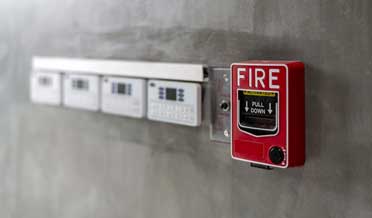
Choosing the Right Commercial Fire Alarm Systems
Commercial Fire Alarm Systems are a key piece in a total commercial fire protection system. They serve as early warning systems, catching the presence of smoke at very early stages. This gives occupants time to evacuate and emergency responders time to act.
Commercial Fire Alarm Systems come with various technologies and have different purposes. They need to be repaired, replaced, or upgraded from time to time, so here is a basic primer on the use of fire alarms.
Ionization Fire Alarms
This technology was introduced for commercial and industrial applications in 1951 and for residential use in 1955. They are better at detecting some types of fires than others. Here are the important details.
- Ionization alarms have a tiny amount of a radioactive element, 241Americium, enclosed in both foil and ceramic. This substance ionizes the air between electrically charged plates, allowing current to flow through the air molecules. Smoke disrupts the electric current and triggers the alarm.
- Ionization alarms are triggered quickly by the flaming stage of fire, compared to smoldering smoke. They are easily triggered by sudden intense heat (such as cooking with high heat) or steam from a hot shower.
- The radioactivity emitted by the Americium does not travel far and will not penetrate human skin. It poses a danger when inhaled or ingested, so disposing of retired alarms must be done properly to keep the element out of the water table. (Public health statement concerning Americium1 )
Photoelectric Fire Alarms
This technology was developed for commercial use in the late 1960s and found its way into homes in the early 1970s. They are better at detecting some types of fires than others. Here are the important details.
- Photoelectric alarms shine a very small but intense beam of light across a short distance onto a light-sensitive plate. Smoke particles enter the detector, breaking the beam and triggering the alarm.
- Photoelectric alarms are triggered quickly by a smoldering, slow-burning fire.
- This type of alarm does not contain material hazardous to the environment. However, see the notice at the end of the article.
Combination or Dual-Sensor Alarms
- As you might imagine, dual-sensor alarms use both ionization and photoelectric technologies in the same alarm compartment.
- These alarms are very responsive to both the intense heat and dense smoke of various causes of fire.
Disposing of Fire Alarms
- While some fire alarms are hard-wired into the electrical system, most fire alarms also use batteries for various functions. The batteries should be changed annually to ensure they are in good working order during an emergency.
- Fire alarms should be replaced occasionally, about every 10 years or so. Check with the manufacturer or a trusted fire safety firm.
- Since it is hard to distinguish between ionization, photoelectric, or combination alarms, no fire alarm should be disposed of in a landfill. Check the reverse side of the alarm for instructions for disposal.
Fire alarms are small key components in a complete fire protection system.
If you have questions about Commercial Fire Alarm Systems, we can help.
Call Fire Safe Protection Services today at 713-722-7800 or visit our online form, and we will be in contact as soon as possible about your Commercial Fire Alarm Systems questions.
1 https://wwwn.cdc.gov/TSP/PHS/PHS.aspx?phsid=809&toxid=158#:~:text=If%20you%20have%201%20gram,than%20that%20of%20243Am