 713-722-7800
Myths About Commercial Fire Sprinkler System
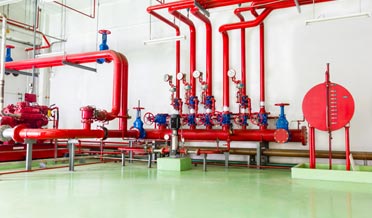
Busting the Hollywood Myths: What You Need to Know About a Commercial Fire Sprinkler System
Hollywood often gets it wrong about fire sprinklers. Most scenes in the movies that show a sprinkler system activate are mostly inaccurate. It’s time to clear up the confusion and set the record straight. We’re tackling the most common myths about commercial fire suppression systems.
Myth 1: A Commercial Fire Sprinkler Is Triggered by Fire Alarms
Reality: In most commercial buildings, pulling a fire alarm won’t set off all the sprinklers. Instead, each sprinkler head has a special heat-sensitive element inside it. This element (either a small glass bulb with liquid or a meltable link) is designed to activate only when it reaches a specific, high temperature, usually directly from the heat of a fire right below it. This ensures that water is directed only where needed, minimizing potential damage to unaffected areas.
Myth 2: All Commercial Fire Sprinkler Systems Contain Water
Reality: Most commercial buildings use wet pipe systems. These systems use water, but not all sprinkler systems rely only on water. For specialized hazards like kitchen fires, wet chemical systems are employed. These systems mix water with organic or inorganic salts, creating a unique “saponification” process. This forms a foamy barrier that effectively suffocates the fire.
Myth 3: All Commercial Fire Sprinkler Heads Activate Simultaneously
Reality: This is a classic Hollywood exaggeration. In the vast majority of cases, only the sprinkler heads directly in the fire’s vicinity will activate. This targeted approach is designed to minimize water damage to unaffected areas of the property.
The only time all sprinklers activate at once is in a deluge system. These are installed in places with highly combustible materials where a fire can grow into an inferno almost instantly, demanding rapid and widespread suppression.
Myth 4: Commercial Fire Sprinkler Systems Do More Damage Than the Actual Fire
Reality: While deluge systems can release a lot of water, most sprinkler systems are designed to only suppress the affected areas. This prevents fires from spreading and significantly limits overall damage, including the extensive smoke damage common in uncontrolled fires.
Here’s the key difference: a fire department hose blasts 50 to 125 gallons of water per minute. A sprinkler, however, uses a controlled 8 to 24 gallons per minute. Since it takes fire departments an average of 9-12 minutes to arrive, an uncontained fire can double or triple in size, demanding much more water to put out. Sprinklers quickly contain the fire with far less water, dramatically reducing damage.
Myth 5: Structures Meeting Building Fire Codes Do Not Need a Commercial Fire Sprinkler System
Reality: Meeting building codes for fire safety is crucial for occupant evacuation, ensuring people can get out safely before a fire becomes unmanageable. However, this doesn’t mean your building is fireproof. A commercial fire sprinkler system goes a step further: it’s specifically designed to protect your assets and minimize business disruption by quickly suppressing the fire threat itself.
Myth 6: Commercial Fire Sprinkler Systems Can Activate Accidentally or Leak
Reality: Forget what you’ve seen in movies—accidental sprinkler activations are extremely rare. Your home’s regular plumbing is much more likely to spring a leak than a properly maintained commercial fire sprinkler system.
There’s also a common fear that something like smoke from a stovetop fire will set off the sprinklers. This simply isn’t true. Fire sprinklers are activated by heat, not smoke. They’re specifically designed to respond only to significant temperature increases that occur directly beneath them, ensuring they only activate when there’s a real fire threat.
Myth 7: Cold Weather Can Cause Commercial Fire Sprinkler Pipes to Burst
Reality: Worried about frozen or burst pipes in cold weather? Don’t be. Fire sprinkler system professionals know exactly how to prevent this. They follow national installation standards that provide expert guidance for cold-region setups. Plus, “dry pipe systems” are specifically designed for unheated spaces. With these systems, water is stored safely behind a pump and only flows to the sprinkler heads when an emergency happens, ensuring the pipes themselves remain free of water and won’t freeze.
Myth 8: I Don’t Need a Commercial Fire Sprinkler System, I am Close to the Fire Department
Reality: While our fire departments are incredibly skilled, they simply can’t match the immediate action of a fire sprinkler system. Sprinkler heads activate instantly when they detect a specific temperature, providing immediate fire suppression the moment a threat emerges. With the average fire department response time being nine to twelve minutes, a fire can escalate significantly and cause major damage before firefighters even arrive. Your sprinkler system is always on guard, ready to act in seconds, not minutes.
Myth 9: I Have Smoke Detectors That Is Enough
Reality: Every building must have smoke detectors; they’re crucial for saving lives by providing early warning. But here’s the critical difference: smoke detectors can’t suppress a fire. All too often, their batteries are dead, giving a false sense of security. A fire sprinkler system, however, is always on, an active suppression system ready to fight the fire instantly.
Myth 10: My Commercial Fire Sprinkler System Works, It Doesn’t Need Testing or Inspecting
Reality: This is a dangerous misconception. For your fire protection system to effectively safeguard your property, all its components must be in optimal working order. The only way to guarantee this is through regular inspections and testing performed by qualified professionals. For instance, quarterly dry testing is crucial for maintaining system readiness.
At Fire Safe Protection Services, we specialize in commercial fire sprinkler system design, build, and installation. Contact us today to discuss the advantages of a fully functioning system and ensure your business is truly fire-safe.
Contact Fire Safe Protection Services today at 713-722-7800 or visit our online form, and we will be in contact as soon as possible about your fire sprinkler systems questions.