 713-722-7800
Commercial Fire Sprinkler System Requirements
Fire Sprinkler System Requirements for Commercial Spaces: A Comprehensive Guide
Fire safety in commercial buildings is not just good practice; it’s a critical legal requirement enforced by federal organizations and local municipalities. Non-compliance with these vital fire codes can lead to significant penalties and put lives at risk. Understanding these fire sprinkler systems regulations is paramount for any commercial property owner or developer.
Key organizations like the National Fire Protection Association (NFPA) and the Occupational Safety and Health Administration (OSHA), part of the U.S. Department of Labor, are instrumental in setting these crucial fire safety standards. In fact, the roots of modern fire sprinkler regulations, now encapsulated in NFPA 13, trace back to the late 1800s, born from concerted efforts to curb devastating fires in burgeoning urban centers like New York City. Furthermore, federal legislation like the U.S. Congress’s Hotel and Motel Fire Safety Act of 19901 mandates fire safety compliance for establishments receiving government funds.
While these national bodies establish overarching guidelines, the specific fire safety rules, particularly concerning sprinklers, are largely determined by local jurisdictions. This means that while fundamental fire safety principles apply nationwide, the precise requirements can vary significantly from one city or county to another.
Fire Sprinkler System Requirements Based on Building Size
The NFPA 13 Standard2 serves as the authoritative guide for the installation of sprinkler systems in commercial buildings. According to this standard, fire sprinkler systems are typically required in:
- Newly constructed commercial buildings with a “fire area” (the total floor area enclosed by fire-resistant walls or exterior walls) of 5,000 square feet or larger.
- Remodeled commercial buildings where additions increase the total area to 12,000 square feet or more.
- Townhomes with more than two units per building.
- Buildings exceeding 55 feet in height.
- Self-storage facilities, with the exception of one-story buildings that lack indoor corridors and possess a one-hour fire barrier.
It’s important to note that these commercial fire sprinkler requirements generally do not apply to single-family detached homes. Although the NFPA briefly mandated sprinklers for all newly constructed one and two-family homes in 2006, this requirement has since been reversed in most states, with local jurisdictions often prohibited from enacting such ordinances.
Understanding the Four Main Types of Fire Sprinkler Systems
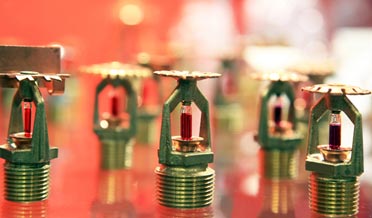
Fire sprinkler systems are vital for protecting building occupants, whether in office parks, apartment complexes, or shopping malls. They operate by detecting a fire’s heat and then dispensing water to either extinguish or significantly slow the spread of the flames. Even if a fire is already underway, sprinklers can provide crucial suppression, allowing occupants more time to safely evacuate.
While various sprinkler systems exist, here are the four most common types:
- Wet Pipe System: The most prevalent and reliable type, wet pipe systems feature a simple design where all piping is continuously filled with water. When a sprinkler head senses sufficient heat from a fire, it activates immediately, discharging water directly onto the flames. These systems typically incorporate automatic sprinklers and an alarm check valve.
- Dry Pipe System: Unlike wet pipe systems, dry pipe systems have pipes filled with pressurized air (or nitrogen) rather than water. A specialized valve prevents water from entering the piping until a fire is detected. When a sprinkler head activates due to extreme heat, the air escapes, causing the valve to open and allowing water to flow into the pipes and out through the activated sprinklers. Dry pipe systems are primarily used in environments where temperatures can drop below freezing, which would otherwise cause water in a wet pipe system to freeze and damage the pipes. However, their activation is slightly delayed due to the need for air to escape before water flows.
- Deluge System: Deluge systems differ from both wet and dry systems in their activation method. They do not have water in the pipes, and their activation is controlled by a separate fire alarm system, rather than individual sprinkler heads sensing heat. When the fire alarm triggers, a central valve opens, allowing water to flood all sprinklers in the designated area simultaneously. These systems are often used in high-hazard areas where rapid and widespread water discharge is necessary.
- Pre-Action System: Pre-action systems offer a combination of features from other systems, providing an added layer of protection against false alarms. Similar to dry pipe systems, their pipes are filled with air. However, these systems are typically activated by smoke detectors or other sophisticated detection systems, not just heat. Water is only released into the pipes after the detection system triggers an alarm, and then only if a sprinkler head also activates due to heat. This dual activation requirement makes them ideal for sensitive environments like museums, libraries, or data centers, where accidental water discharge could cause significant damage.
Ensuring Your Building is Up to Code
Navigating the complexities of commercial fire codes and sprinkler requirements can be challenging. At Fire Safe, we specialize in commercial fire suppression systems and possess in-depth expertise in all relevant fire safety standards. Whether you’re planning new commercial construction or undergoing a significant remodel, our team is proficient in incorporating all necessary fire protection system components to ensure your building is fully compliant with local and federal codes.
Don’t let questions about fire safety linger. Reach out to our knowledgeable team at Fire Safe. We’re here to provide clear answers and ensure your commercial project is built to the highest safety standards.
Contact Fire Safe Protection Services today at 713-722-7800 or visit our online form, and we will be in contact as soon as possible about your fire sprinkler systems questions.
1 https://www.congress.gov/bill/101st-congress/house-bill/94
2 https://www.nfpa.org/codes-and-standards/nfpa-13-standard-development/13