 713-722-7800
Commercial Kitchen Hood Inspection
What You Need to Know About Your Next Commercial Kitchen Hood Inspection
Everyone loves to eat, and it shows: the National Restaurant Association projects $997 billion in sales for 2023. With that much money on the table, many would-be restaurateurs bring their “sure thing” to Main Street. It is a tough business: 60% of new eateries fail after one year and 80% do not survive past a fourth year. To make it in that industry, it takes a lot of hard work and attention to customer service details. Restaurant owners are focused on food quality, cooking methods, and wait staff timing, and complying with fire code regulations is not on the menu.
Fire regulations? In a restaurant? Forty percent of commercial fires happen in kitchens, so building and fire codes are tough for eateries. Restaurants bring together plenty of flammable objects—paper, oils, grease, gas, ignition sources—flames and high heat, plenty of oxygen, and lots of people. Wise, ambitious restaurant owners plan a meticulous fire inspection and cooperate fully to ensure the safety of their business, customers, and staff.
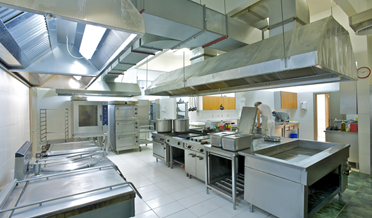
Commercial Kitchen Hood Inspection: Exhaust Hood Function
For several reasons, cooking food indoors requires gases to be exhausted to the outdoors.
- Cooking with natural gas results in the production of carbon dioxide and carbon monoxide and both gases must be exhausted to the outdoors to prevent asphyxiation of building occupants.
- Another product of cooking is food vapors, including gaseous oils and fats. These oils coat EVERYTHING in a kitchen, so pulling them outdoors is essential. The exhaust hood is an important piece of fire safety equipment even when the heat source is electricity.
Commercial Kitchen Hood Inspection: Fire Suppression Equipment
Commercial kitchens require fire suppression equipment that specifically targets oil and grease fires. Water does not extinguish oil fires since the oil floats on top of the water’s surface.
Kitchen equipment uses a soapy foam to coat potential fuel in a kitchen fire. The fire suppression equipment also is designed to shut off electricity and/or the gas supply in a fire event.
Commercial Kitchen Hood Inspection: Regular Inspections
Fire safety equipment is necessary to prevent fires and protect life and property. The restaurant staff do not willingly ignore fire regulations, but neither do they generally focus on them either. The fire code regulates an inspection to take place twice annually by a licensed professional. An inspection will include:
- Visual inspection of the kitchen for clutter that impedes an emergency evacuation
- Visual inspection of debris left near the flame or heat source
- Visual inspection of any grease buildup on kitchen surfaces.
- A test of the gas pressure gauge to ensure the proper pressure
- A test of the electrical controls that shut off gas and electricity
- A simulation test of the suppressant delivery system
- Repairs or replacement of damaged parts
An inspection report will be generated for the kitchen’s records and submitted to the regulatory agency.
The hood vents will also need to be completely cleaned according to regulations.
Building codes were developed over the years to prevent the loss of life and property during fire events. Since commercial kitchens experience a significant number of fires, the need for fire safety regulations is necessary.
Have a question about Commercial Kitchen Hood Inspections?
Call Fire Safe Protection Services today at 713-722-7800 or visit our online form and we will be in contact as soon as possible about your Commercial Kitchen Hood Inspection questions.