 713-722-7800
Navigating Fire Safety Compliance
Which NFPA Fire Safety Codes Apply to Your Business?
For business owners and facility managers, fire protection is not just a fire safety measure—it is a rigorous legal requirement. Navigating the complex landscape of fire safety means adhering to the standards set by the National Fire Protection Association (NFPA). Compliance with these codes ensures that your fire sprinkler systems, alarms, and extinguishers are ready to perform in an emergency, protecting both your assets and your personnel.
Based on the specialized services provided by Fire Safe, here is a breakdown of the specific NFPA codes and standards that most commercial facilities must follow to maintain compliance and pass inspections.
NFPA 25: The Standard for Fire Sprinkler Systems
If your building utilizes an automatic commercial fire sprinkler system, NFPA 25 is the most critical code in your vocabulary. This standard governs the inspection, testing, and maintenance of water-based fire protection systems.
Compliance with NFPA 25 requires a rigorous schedule of professional oversight. As highlighted by Fire Safe’s inspection protocols, this includes checking gauges, control valves, and water flow alarms. Because fire sprinklers are complex mechanical systems, they are susceptible to internal issues that aren’t visible from the outside.
This is where specialized Ultrasonic Testing becomes essential. By using ultrasonic technology to check for internal corrosion or obstructions without damaging the pipes, facility owners can meet the deep-level maintenance requirements mandated by NFPA standards, ensuring the system doesn’t fail due to “hidden” decay.
NFPA 72: Fire Alarm and Signaling Code
Your fire alarm system serves as the “brain” of your fire defense, and NFPA 72 provides the blueprints for its operation. This code covers the application, installation, location, and maintenance of fire alarm systems and emergency communication systems.
To comply with NFPA 72, business owners must ensure their systems are not only functional but also properly monitored. Fire Safe’s 24/7 Fire Alarm Monitoring services are designed to satisfy these requirements by ensuring that an emergency signal is instantly transmitted to a central station and local fire departments. Regular testing of smoke detectors, pull stations, and notification appliances (horns and strobes) is required to ensure that the system provides the early warning necessary to save lives.
NFPA 10: Portable Fire Extinguishers
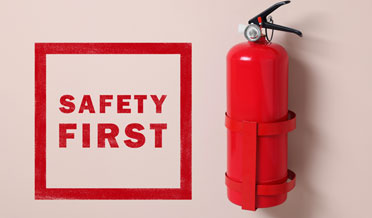
Portable fire extinguishers are the first line of defense for small fires, and their placement and upkeep are strictly regulated by NFPA 10. This standard ensures that extinguishers are fully charged, accessible, and appropriate for the specific fire hazards present in your building.
Compliance under NFPA 10 involves:
- Monthly Visual Inspections: Ensuring the unit is in its designated place and the pressure gauge is in the green zone.
- Annual Maintenance: A thorough examination by a certified fire safety professional.
- Hydrostatic Testing: Periodic pressure testing of the extinguisher cylinder to ensure it can safely hold its contents.
NFPA 101: Life Safety Code
While the codes above focus on specific equipment, NFPA 101 (The Life Safety Code) focuses on the building as a whole. It addresses “egress”—the ability for occupants to exit the building safely. This includes requirements for emergency lighting, exit signs, and the integration of fire alarms and sprinklers to ensure a clear path to safety during an evacuation.
Why Professional Inspections Are Non-Negotiable
The challenge for business owners is that these codes are not “set it and forget it.” NFPA standards mandate periodic documentation and certified testing to remain in legal standing. Fire Safe provides the comprehensive Inspection and Testing services required to keep your facility in line with these various NFPA mandates. From annual sprinkler tests to quarterly alarm checks, professional documentation is your only proof of compliance during a Fire Marshal visit.
By partnering with experts who understand the intersection of NFPA 10, 25, and 72, you can shift your focus back to running your business, knowing that your fire protection strategy is backed by the highest industry standards.
Contact Fire Safe Protection Services today at 713-722-7800 or visit our online form, and we will be in contact as soon as possible about your Fire Safety and ultrasonic testing questions.