
 713-722-7800
How to Prevent EV Charging Fires in Your Company Garage
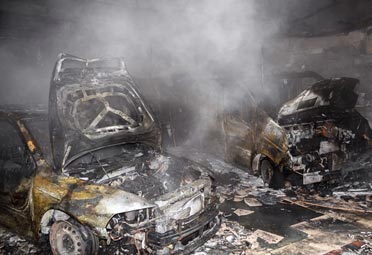
Prevent EV Charging Fires
Internal combustion engine (ICE) vehicles have been around for a while and most of us have seen car fires, perhaps alongside a road at a very inconvenient time of day. Since electric vehicles (EV) are rather new, most people might not realize that EVs can catch fire and an EV fire event is quite different from an ICE vehicle fire. If your business includes a large parking lot or a parking garage, you should be aware of the difference between potential fires between the two types of vehicles.
Prevent EV Charging Fires: What Causes Fires in Automobiles?
Automobile accidents involving any vehicle may result in a fire. Here are the major causes of other vehicle fires.
- Even though internal combustion engines require a tank with an explosive/combustible fuel source, engineers have designed them to be very safe. The cause of the majority of non-accident ICE vehicle fires is extreme heat, usually caused by a malfunction or lack of maintenance. The normal operating temperature of a gas engine is approximately 200-2200 While a spark can ignite gasoline at almost any temperature, it spontaneously combusts at 5360 Fahrenheit. Malfunctions that cause metal-to-metal friction are the prime reason fuel, lubricants, and even tires combust without a spark on ICE vehicles.
- Electric vehicles do catch fire, but it rarely happens; the chance of an ICE vehicle catching fire is 1.05%, while the chances of an EV catching fire is .03%.1 The major cause of EV fires is a fault in or case rupture of lithium-ion battery packs. When a casing breaks, an extremely volatile gas escapes and is ignited by the electrical charge generated by the battery. Multiple batteries are required for EV operations; when one battery fails, the resulting fire can cause sequential battery ruptures.
Extinguishing Vehicle Fires
Keys to extinguishing any fire is to remove one or more of the requirements for a fire: oxygen, fuel, and the ignition source.
- An ICE vehicle fire can produce heat that exceeds 1500 degrees 2 Therefore, the key to extinguishing a fire in an ICE vehicle is to keep the flame/heat from fuel sources, especially the fuel tank. Water and foam can be used to separate oxygen and flame from the fuel source. Enough water must be applied to cool hot metal and plastics to prevent re-ignition. Both the intense heat and the potential for an explosion puts nearby vehicles and structures in danger of combustion.
- An EV fire burns much hotter, reaching approximately 36000 Each battery is its own fuel source, with multiple connections, making it difficult to extinguish. EV fires require much more water to extinguish the flames and cool the vehicle components. EV fires have been known to re-ignite—sometimes days after being extinguished when new shorts happen. Generating this intense heat, EV fires endanger other vehicles and structures. They pose less of a risk of explosion.
Prevent EV Charging Fires Planning Tips
Less than 600,000 electric vehicles have been sold in the U.S. as of April 2022, about 4% of the total vehicles in use. However, that number is expected to increase exponentially over the coming years. As a business owner, there are several steps you can take to prepare for the event of an EV fire on your property.
- Your local fire department will be an essential source of information. As new information becomes available, they will receive it first. Request updates as they become available.
- Update your emergency response plan to include an EV fire event. With the anticipated increase of EVs finding their way onto your property, make sure you plan for a fire event.
- Train and drill the appropriate building staff concerning the threats posed by EV fires to ensure the proper reaction to an EV fire.
- Make sure the proper fire safety equipment is in place, including special equipment recommended by the local fire department.
Have Questions About Prevent EV Charging Fires?
Call Fire Safe Protection Services today at 713-722-7800 or visit our online form and we will be in contact as soon as possible about your questions regarding how to Prevent EV Charging Fires.
1 https://www.wcnc.com/article/news/verify/electric-vehicle-fires-rare-verify-research-continues/275-2dbf7fd1-5d5d-48a7-b2c1-a46490f55637
2 https://www.wcnc.com/article/news/verify/electric-vehicle-fires-rare-verify-research-continues/275-2dbf7fd1-5d5d-48a7-b2c1-a46490f55637